
Retatrutide Research • Indonesia
Retatrutide in Bali & Indonesia
Explore the science behind Retatrutide, its investigational status, emerging clinical research, and the importance of independently verified peptide testing.
Educational information • Evidence-focused • Atlas Longevity
The basics
What Is Retatrutide?
Retatrutide is an investigational peptide being studied for its potential effects on body weight, appetite regulation, glucose metabolism and metabolic health.
Unlike medications that target only one or two metabolic hormone receptors, Retatrutide acts on three receptors:
GLP-1 receptor
Involved in appetite regulation, insulin secretion and glucose control.
GIP receptor
Involved in glucose-dependent insulin signalling and metabolic regulation.
Glucagon receptor
Involved in energy metabolism and hepatic glucose regulation.
This triple-receptor mechanism is one reason Retatrutide has attracted significant attention in obesity and metabolic
disease research.
Retatrutide is not an established, approved weight-loss treatment, and investigational results should not be interpreted as proof of long-term safety.
Clinical evidence
What Does Clinical Research Say About Retatrutide?
Retatrutide has been investigated in clinical trials involving adults with obesity or overweight and certain metabolic conditions.
24.2%
A published phase 2 trial (Jastreboff et al., New England Journal of Medicine, 2023) reported a mean weight reduction of approximately 24.2% in one higher-dose group over 48 weeks. This is a controlled clinical-trial result, not an expected outcome for every individual.
Clinical studies also report adverse events, particularly gastrointestinal symptoms, and researchers continue evaluating longer-term safety and effectiveness.
Presentation
Understanding Retatrutide Pens and Vials
Retatrutide may be discussed or encountered in different presentation formats. Packaging format does not establish whether a medicine is approved, appropriately manufactured, sterile or suitable for human use.
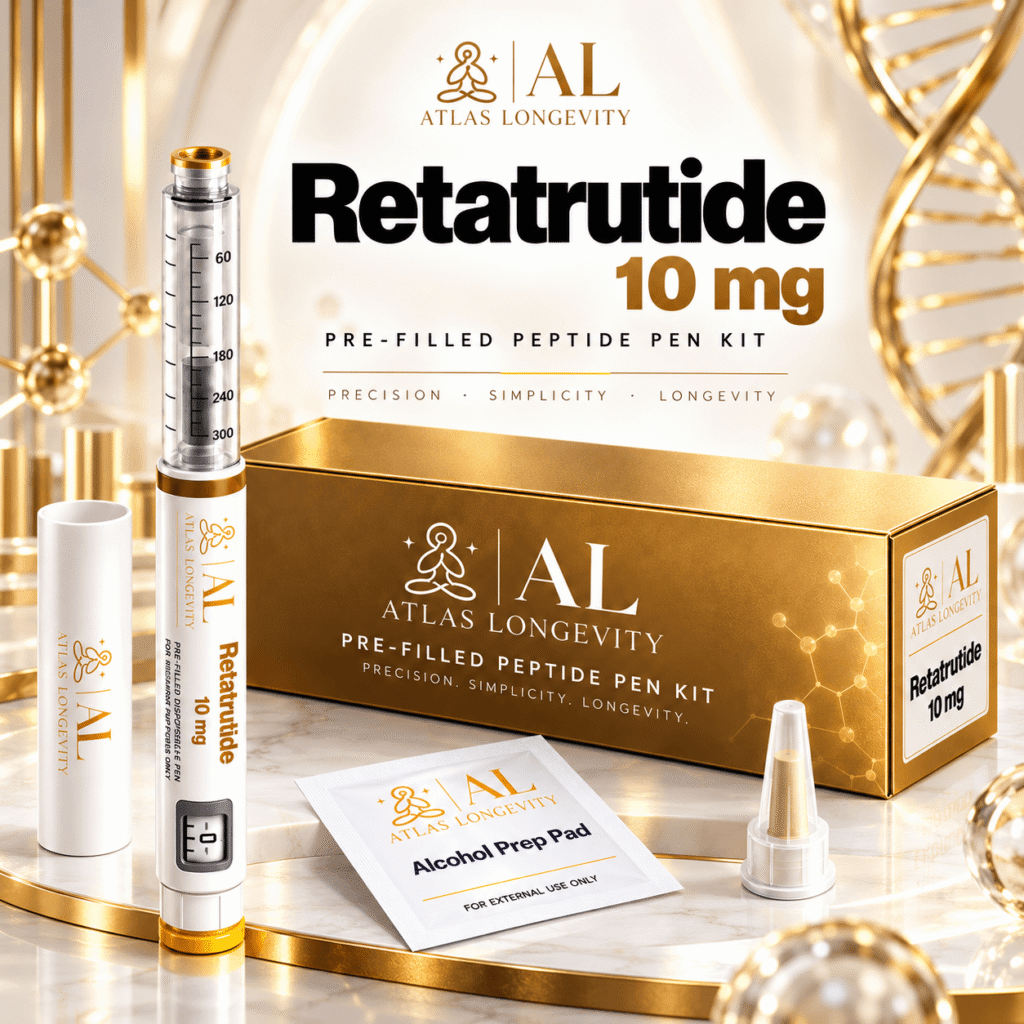
Retatrutide Pen
Information about cartridge systems, labelling, concentration and product verification.

Retatrutide Vial
Information about vial presentation, batch identification, handling and quality documentation.
Peptide quality
Why Independent Batch Testing Matters
When evaluating peptide research materials, quality documentation is an important part of understanding what has actually been tested.
A Certificate of Analysis (COA) may provide information about identity, purity and other laboratory findings, depending on the tests performed. Important questions include whether the documentation corresponds to the exact batch, which laboratory performed the analysis, and whether the results can be independently verified.
Batch identification
Connects a test report with a specific production batch.
Independent testing
Provides analysis from a laboratory separate from the manufacturer.
Identity & purity
Helps establish what material was tested and its reported composition.
Sterility & endotoxins
Require separate testing; a purity result alone does not establish injectable safety.
Bali
Retatrutide Information for Bali
Bali has a growing wellness and longevity community, and interest in metabolic health research continues to expand.
This resource provides English-language educational information for readers in Canggu, Seminyak, Uluwatu, Ubud, Sanur, Denpasar, Nusa Dua and surrounding areas.
It is important to distinguish between clinical research, authorised medical treatment and unapproved peptide products. Readers considering treatment for obesity or metabolic conditions should consult a qualified healthcare professional.
Indonesia
Retatrutide Research and Regulatory Information Across Indonesia
Readers across Jakarta, Surabaya, Bandung, Yogyakarta, Lombok and other parts of Indonesia can use this resource to learn about Retatrutide’s mechanism, clinical evidence, limitations and regulatory considerations.
Availability, import permissions, prescription requirements and medical advertising restrictions must be checked against current Indonesian regulations and BPOM requirements. A product’s appearance on a commercial website does not establish its legal authorisation.
Official information: BPOM — Badan Pengawas Obat dan Makanan
Comparison
How Does Retatrutide Compare With Semaglutide and Tirzepatide?
Compound
Main receptor activity
General status
Retatrutide
GLP-1, GIP, glucagon
Investigational
Tirzepatide
GLP-1, GIP
Approved in some jurisdictions for specified indications
Semaglutide
GLP-1
Approved in some jurisdictions for specified indications
These compounds differ in mechanism, clinical evidence, approved indications and safety information. There are no grounds to assume one is appropriate for a particular person solely because one clinical trial reported a larger average weight reduction. Cross-trial comparisons are limited by differences in populations, study design and treatment duration.
Safety
Retatrutide Safety: What You Should Know
Clinical research has identified adverse events associated with Retatrutide, including nausea, vomiting, diarrhoea and other gastrointestinal symptoms. Additional safety questions remain under investigation.
Unapproved products may also introduce separate concerns involving manufacturing quality, contamination, incorrect concentrations or inadequate handling.
Anyone considering medication for weight management should seek individual medical assessment.
Who we are
About Atlas Longevity
Atlas Longevity is a Bali-based longevity and peptide-focused brand with an emphasis on clear information, transparent product documentation and responsive customer support.
Through our educational resources, we aim to help readers understand peptide research, distinguish clinical evidence from marketing claims, and recognise the importance of independent verification.
FAQ
Frequently Asked Questions About Retatrutide
Its Indonesian regulatory status should be checked directly against current BPOM records. Clinical trials or availability in another country do not establish Indonesian approval.
Whether Retatrutide can legally be supplied depends on its regulatory classification, authorisation and applicable Indonesian laws. Consult BPOM and a qualified healthcare professional before considering any product.
A pen uses a cartridge-based delivery mechanism, while a vial is a separate container. Neither presentation guarantees quality, sterility, approval or suitability for injection.
Retatrutide acts on GLP-1, GIP and glucagon receptors. Tirzepatide acts on GLP-1 and GIP receptors. Their clinical evidence and regulatory statuses differ.
Clinical trials have reported significant average weight reductions in studied populations. Individual outcomes vary, and investigational results do not establish general safety or approval.
A Certificate of Analysis documents particular laboratory tests on a sample or batch. Depending on its scope, it may include identity or purity results, but it does not automatically establish sterility or clinical safety.
Reported adverse events include nausea, vomiting, diarrhoea and other gastrointestinal symptoms. Longer-term safety remains an important area of research.
Legal supply and shipping depend on applicable product classification, regulatory authorisation and distribution requirements.
No. Semaglutide acts primarily on GLP-1 receptors, while Retatrutide targets three metabolic hormone receptors.